Precision Handling for the High-Tech Sector: The Role of Industrial Suction Cups in Electronics

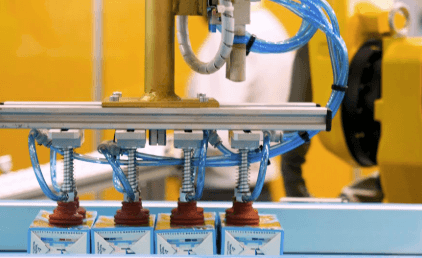
In the high-stakes world of semiconductor manufacturing and electronics assembly, the margin for error is non-existent. As components become smaller, thinner, and more fragile, the challenge for automation engineers is to maintain high-speed throughput without causing structural or electrostatic damage. This demand has led to a new generation of specialized industrial suction cups designed specifically for the “pick-and-place” of microchips, PCBs, and ultra-thin display glass.
When traditional mechanical grippers risk crushing or scratching sensitive surfaces, vacuum-based industrial suction cups provide a gentle yet firm solution that is essential for the modern high-tech cleanroom.
Overcoming Challenges in Micro-Component Handling
Handling electronics requires more than just a vacuum; it requires a deep understanding of material science. Unlike heavy industrial applications, the electronics sector utilizes industrial suction cups that must address two primary concerns: surface contamination and static discharge.
ESD Protection and Material Selection
Electrostatic Discharge (ESD) is the silent killer of electronic components. Standard rubber or silicone can build up a static charge during high-speed movements, which can fry a delicate circuit upon contact. Advanced industrial suction cups for this sector are manufactured from conductive or dissipative materials. These specialized elastomers ensure that any static charge is safely bled off, protecting the integrity of the semiconductor.
Mark-Free and Contamination-Free Handling
In the production of lenses or mobile phone screens, even a microscopic “suction mark” can lead to a rejected part. Manufacturers now utilize non-marking, low-blooming materials in their industrial suction cups to ensure that no silicone oils or chemical residues are left behind on the glass. This eliminates the need for expensive post-production cleaning steps.
See also: Charter a Bus for Weddings: The Ultimate Transportation Solution
Specialized Designs for Fragile Workpieces
The geometry of industrial suction cups in the electronics industry is often far more complex than standard bellows.
- Miniature Suction Cups: With diameters as small as 0.5mm, these are used for the precision placement of Surface Mount Devices (SMD).
- Thin-Lip Designs: To handle ultra-thin wafers or flexible circuits, suction cups with extremely soft, flexible lips are used to create a seal without applying downward pressure that could crack the substrate.
- Vortex and Bernoulli Grippers: For the most sensitive items, some “non-contact” industrial suction cups use airflow to create a lifting force, allowing the component to “float” just microns below the gripper.
For a comprehensive look at the different types of vacuum components and how to integrate them into your automated assembly line, you can refer to this technical resource on industrial suction cups and robotic integration.
Optimizing Vacuum Systems for Speed and Accuracy
In a high-speed assembly line, the “cycle time”—the time it takes to pick up, move, and release a part—is measured in milliseconds. The efficiency of the industrial suction cups is dependent on the vacuum generator’s ability to create and break a seal instantly.
Implementing “vacuum blow-off” systems ensures that the part is released precisely when intended, preventing the “sticking” effect that can occur with soft silicone cups. By fine-tuning the balance between vacuum flow and cup material, manufacturers can achieve the blistering speeds required to meet global electronics demand.
Conclusion: Small Components, Big Impact
The evolution of industrial suction cups has been a quiet but vital driver of the electronics revolution. By providing a safe, clean, and ESD-safe interface between the machine and the component, these tools allow for the mass production of the devices that power our modern world. As devices continue to shrink and complexity increases, the innovation found in vacuum handling technology will remain at the heart of the assembly line.