7 Long-Haul Travel Routes That Connect Saudi Arabia, Bali, and South Africa for Serious Globetrotters in 2026

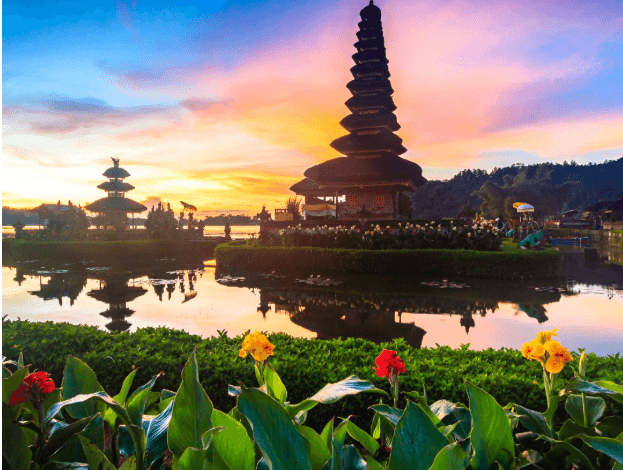
The most adventurous international itineraries in 2026 are connecting destinations that few travelers think to combine: Saudi Arabia’s newly accessible ancient cities, Bali’s spiritual and creative landscape, and South Africa’s extraordinary wildlife and urban culture. Each of these destinations requires specific eSIM preparation that differs meaningfully from standard travel planning. Pre-purchasing destination-specific plans through Mobimatter before departure is what makes multi-continent itineraries like these genuinely manageable rather than logistically exhausting.
Long-haul travel has a specific character that shorter regional trips do not share. The investment of time, money, and planning energy required to reach genuinely distant destinations creates a different relationship with each place you visit. You stay longer because the journey itself demands it. You engage more deeply because surface-level tourism feels insufficient given what the trip required. And you plan more carefully because the consequences of poor preparation are proportionally larger when you are twelve hours from home rather than two.
The combination of Saudi Arabia, Bali, and South Africa into a single extended itinerary represents exactly this kind of ambitious long-haul planning. Three destinations on three different continents, each with distinct cultural contexts, distinct connectivity environments, and distinct logistical requirements, connected into a journey that rewards the traveler who prepared thoroughly over the one who improvised at each stage. Getting connectivity sorted before departure through Mobimatter is the preparation step that has the most consistent impact on long-haul travel quality, because it removes the data access variable from every other logistical decision the trip requires. Travelers planning the Saudi Arabia leg of this circuit should get their eSIM Saudi Arabia plan sorted through Mobimatter before departure, landing in Riyadh or Jeddah already connected to local carrier networks rather than hunting for SIM options at the airport.
1. Saudi Arabia: The Arabian Peninsula’s Most Surprising New Travel Destination
Saudi Arabia’s transformation into an accessible international travel destination represents one of the most dramatic shifts in global tourism in recent years. The Kingdom has invested significantly in tourism infrastructure as part of its Vision 2030 economic diversification program, and destinations that were effectively closed to international leisure visitors a few years ago are now receiving travelers from every continent.
Al-Ula in the northwest of Saudi Arabia is the destination that has most captured international travel attention. The Hegra archaeological site, with its Nabataean tombs carved directly into sandstone outcrops in a desert landscape of extraordinary drama, is genuinely comparable to Petra in Jordan in historical significance and visual impact. The difference is that Al-Ula currently has a fraction of Petra’s visitor volume, which means that travelers who visit in 2026 are experiencing something that feels genuinely discovered rather than thoroughly touristed.
Beyond Al-Ula, Saudi Arabia’s travel landscape includes:
Riyadh and the Historic Diriyah District: The capital city combined with the UNESCO-listed birthplace of the Saudi state creates a compelling urban itinerary that combines contemporary Gulf city energy with genuine historical depth. The Diriyah restoration project has transformed a previously neglected historic site into one of the region’s most impressive heritage experiences.
The Edge of the World near Riyadh: An escarpment rising dramatically from the desert floor approximately 90 kilometers from Riyadh delivers one of the region’s most spectacular landscapes and requires the kind of navigation support that reliable mobile data provides on roads that are not always clearly marked.
Jeddah’s Historic Al-Balad District: The coral-stone architecture of Jeddah’s UNESCO-listed historic quarter represents a completely different architectural tradition from the desert and sandstone character of the interior, adding a Red Sea coastal dimension to any Saudi itinerary.
Saudi Arabia connectivity for travelers:
The Kingdom’s major cities including Riyadh, Jeddah, and Medina all have strong 4G and expanding 5G coverage. The more remote destinations including Al-Ula have improving connectivity as tourism infrastructure investment has included telecommunications. The road corridors between major cities on the main highway network maintain reasonable coverage with gaps in the most remote desert sections.
2. Bali: The Creative and Spiritual Counterpoint to the Saudi Desert
If Saudi Arabia represents the ancient world’s grandeur, Bali offers the counterpoint: a living spiritual culture embedded in landscapes of extraordinary natural beauty, where rice terrace agriculture, Hindu temple ceremonial life, and a thriving creative community coexist in ways that produce one of the world’s most distinctive destination atmospheres.
Bali in 2026 has bifurcated meaningfully between the tourism-intensive south, particularly the Seminyak, Kuta, and Canggu corridor, and the more reflective experience available to travelers who venture beyond this zone. The northern highlands around Munduk and Bedugul, the east coast beaches of Amed and Padang Bai, the artistic village of Penestanan near Ubud, and the traditional weaving villages of the eastern regencies all offer a Bali that is recognizably the same island while feeling entirely different from the Instagram-saturated southern coast.
Bali connectivity reality in 2026:
The south Bali tourism corridor has strong connectivity from all major Indonesian carriers with good 4G performance throughout Seminyak, Canggu, Kuta, and the Nusa Dua resort area. Ubud maintains reasonable connectivity in the town center and along the main Monkey Forest road with variable performance on more remote rice terrace walking routes. The northern highlands and east coast destinations have adequate coverage in town centers with gaps in more remote areas.
Getting an eSIM Bali plan through Mobimatter before the Indonesian leg of this circuit connects travelers to local carrier infrastructure immediately on arrival at Ngurah Rai International Airport, which is useful given that the airport SIM vendor area is typically busy and the competitive SIM market at the airport does not always surface the best value options for travelers who have not researched their options in advance.
Bali specific connectivity applications for long-haul travelers:
- Temple ceremony timing research since Bali’s Hindu ceremonial calendar produces extraordinary public ceremonies at specific temples on rotating schedules that are not published in static guides
- Rice terrace walking route navigation where the path between Tegalalang, Jatiluwih, and other agricultural landscape areas requires GPS support on narrow farm tracks
- Accommodation flexibility booking since Bali’s villa and guesthouse market operates with significant last-minute availability for longer stays that rewards research-enabled booking decisions
- Transport booking through local apps that provide better pricing than hotel-arranged drivers for many journeys
3. South Africa: The Final Continent for the Complete Long-Haul Circuit
South Africa sits geographically at the opposite extreme from the Saudi Arabian Peninsula and culturally at an entirely different point on the world’s diversity spectrum. Cape Town is consistently ranked among the world’s most beautiful cities for reasons that are immediately apparent from the Waterfront or from any of the viewpoints on Table Mountain. The Garden Route connecting Cape Town to Port Elizabeth through some of Africa’s most spectacular coastal landscape is one of the world’s great drives. And the Kruger National Park offers wildlife viewing experiences that remain among the most extraordinary available anywhere on Earth.
South Africa is also an English-speaking country with a well-developed tourism infrastructure that makes independent travel logistics more straightforward than in many African destinations. This accessibility does not reduce the intensity of the experience but it does make the planning and execution less demanding than genuinely remote African destinations.
South Africa connectivity across key destinations:
Cape Town delivers strong 4G and expanding 5G coverage throughout the city bowl, Waterfront area, Atlantic Seaboard, and Southern Suburbs. The Table Mountain cable car area has reasonable connectivity despite the elevation. The Cape Peninsula route south to the Cape of Good Hope through the Cape Point Nature Reserve has variable coverage with gaps in the most remote southern sections.
The Garden Route from Cape Town through Mossel Bay, George, Wilderness, Knysna, and Plettenberg Bay maintains adequate coverage along the N2 highway corridor. The more scenic inland detours through the Outeniqua Mountains have less consistent coverage.
Kruger National Park connectivity: The main rest camps including Skukuza, Lower Sabie, and Satara have WiFi for guests and some mobile coverage. The game drive routes between camps have variable coverage depending on proximity to rest camp infrastructure. The private game reserves bordering Kruger in the Sabi Sand area have adequate coverage at most lodge properties.
4. Planning the Multi-Continent eSIM Stack for This Circuit
Managing connectivity across Saudi Arabia, Bali, and South Africa requires three separate country-specific eSIM plans that reflect the distinct telecommunications markets in each destination. All three can be purchased through Mobimatter and installed as profiles on a compatible device before departure.
The installation sequence that experienced long-haul travelers use:
- Purchase all three country plans from Mobimatter at least 48 hours before departure
- Install all three QR codes at home with reliable WiFi, labeling each profile clearly
- Activate the Saudi Arabia profile when entering the Kingdom
- Switch to the Bali profile on arrival at Ngurah Rai Airport in Indonesia
- Activate the South Africa profile on arrival at OR Tambo International or Cape Town International Airport
Data sizing for the full circuit:
| Destination | Recommended Data | Trip Duration | Key Usage |
| Saudi Arabia | 15 to 20 GB | 2 to 3 weeks | Navigation, research, communication |
| Bali | 12 to 18 GB | 2 to 3 weeks | Navigation, booking flexibility, creative research |
| South Africa | 15 to 25 GB | 2 to 4 weeks | Wildlife research, navigation, accommodation |
5. Wildlife Research and Game Drive Planning That Requires Connectivity
South Africa’s wildlife experience is significantly enhanced by the real-time information that connected travelers can access. The wildlife photography and safari communities that operate around Kruger and the private reserves maintain active social media presences where current sightings, rare animal locations, and optimal viewing conditions are shared daily.
A traveler with data access during a South African safari can:
- Monitor current big cat sighting reports from ranger and guide communities on Twitter and dedicated safari platforms
- Check weather and visibility conditions at specific areas within Kruger before choosing which game drive direction to take
- Research which private reserves currently have active leopard territories or lion prides in accessible locations
- Book last-minute game drives at better rates when operators have unfilled vehicles on specific mornings
6. Desert Navigation in Saudi Arabia That Depends on Reliable Data
Saudi Arabia’s most rewarding destinations outside its major cities require the kind of GPS-dependent navigation that reflects the country’s desert geography. Roads that appear clear on a standard map may pass through areas with limited signage, and the distance between destinations means that a wrong turn can add significant time to a journey in terrain where shade and fuel stops are not frequent.
The Al-Ula to Hegra route, the Riyadh to Edge of the World track, and the Jeddah to the volcanic Al Wahbah Crater all require navigation support that functions continuously rather than intermittently. Downloading offline maps before each remote excursion from the last well-connected urban area is the preparation habit that experienced Saudi Arabia travelers develop quickly.
7. Cultural Research That Enriches Each Destination on the Circuit
The depth of experience available at all three destinations on this circuit, Saudi Arabia’s Nabataean heritage, Bali’s living Hindu ceremonial culture, and South Africa’s complex layered history, is significantly greater for travelers who arrive with research tools working throughout each visit rather than relying on information gathered before departure.
Real-time cultural research applications across the circuit:
Saudi Arabia: Archaeological context research at Hegra that explains the specific characteristics of individual tomb facades, the social status of the Nabataean families who commissioned them, and the trade routes that made the Nabataean civilization wealthy enough to create them.
Bali: Temple ceremony identification that explains which deity or occasion a specific ceremony honors, what the specific offerings represent symbolically, and how to position as a respectful observer without disrupting the ceremonial process.
South Africa: Historical context research at sites including Robben Island, the District Six Museum in Cape Town, and the Apartheid Museum in Johannesburg that layers contemporary South African social context onto historical events in ways that static audio guides cannot fully provide.
For travelers completing the South Africa portion of this long-haul circuit and wanting to ensure reliable connectivity from arrival through the Garden Route and into Kruger, purchasing an eSIM South Africa plan through Mobimatter before departure ensures local carrier quality connectivity that supports all the research, navigation, and communication needs that South Africa travel creates.
See also: How Seoul Business Trip Massage Improves Travel Experience for Professionals
Frequently Asked Questions
Is Saudi Arabia genuinely accessible for independent travelers without a tour group in 2026? Yes. Saudi Arabia introduced tourist visas available to citizens of numerous countries in 2019 and has significantly expanded both visa accessibility and tourism infrastructure since then. Independent travelers can visit most tourist destinations including Al-Ula, Riyadh, Jeddah, and the Red Sea coast without tour group requirements. Some specific sites within Mecca and Medina remain restricted to Muslim visitors. A standard tourist visa is available through Saudi Arabia’s e-visa system online before travel.
What is the best time of year to visit all three destinations on a combined Saudi Arabia, Bali, South Africa circuit? The optimal combined timing is most achievable between October and March. Saudi Arabia is most comfortable from October through March when desert temperatures are manageable rather than extreme. Bali has no strongly bad season but the dry season from April through October offers the most consistently clear weather, with October being the transition month that can work well. South Africa’s best wildlife viewing in Kruger is during the dry winter season from May through September when vegetation thins and animals concentrate around water sources. A circuit that visits South Africa for its dry season wildlife viewing and then moves to Saudi Arabia and Bali before or after represents the most weather-optimized approach.
How does eSIM connectivity in South Africa’s national parks compare to the rest of the country? South Africa’s urban areas including Cape Town, Johannesburg, and Durban deliver strong connectivity comparable to developed country standards. The Garden Route towns maintain adequate connectivity throughout. National park connectivity is more variable with main rest camps having WiFi and some mobile coverage while game drive routes between camps have gaps depending on topography and distance from infrastructure. Private reserves adjacent to Kruger typically have good lodge connectivity from satellite internet supplemented by mobile coverage near camp facilities.
Can a single eSIM plan cover both Saudi Arabia and Bali or do travelers need separate plans? Saudi Arabia and Bali require separate eSIM plans as they fall within different national telecommunications markets with no combined plan currently available that provides local carrier quality coverage in both. Mobimatter offers individual country plans for both destinations that can be installed as separate profiles on any compatible device. The profiles sit inactive until needed and activating the correct profile when crossing between countries takes seconds in cellular settings.
What data allowance is realistic for a wildlife photographer spending three weeks in South Africa? A wildlife photographer spending three weeks in South Africa with active game drives, frequent photo uploads to cloud storage, social media sharing, and professional communication needs should budget 30 to 40 GB. The upload requirements for large photo files are the primary data driver for photographers compared to standard traveler use. Downloading offline maps of Kruger and the Garden Route before entering coverage-limited areas reduces reliance on live navigation data during drives, extending the effective life of the data plan.